
kom ombo temple
The name of the site goes back to the word "Kum" in Arabic, a term found in the names of many archaeological sites, and the word "Ombo", which is derived from the ancient Egyptian language "Nopet", meaning gold. In general, the name of the region means "the golden city."
The city's temple is dedicated to two deities: the crocodile deity Sobek, and the falcon-shaped deity Horus (Horus the Great). Although a previous temple already existed here during the New Kingdom (ca. 1550-1069 BC), the current structure of the temple was built during the Greco-Roman era (332 BC - 395 AD), and the first documented royal name was Ptolemy. VI (180 - 145 BC). Ptolemy XII (80-51 BC) completed most of the decoration in the temple.
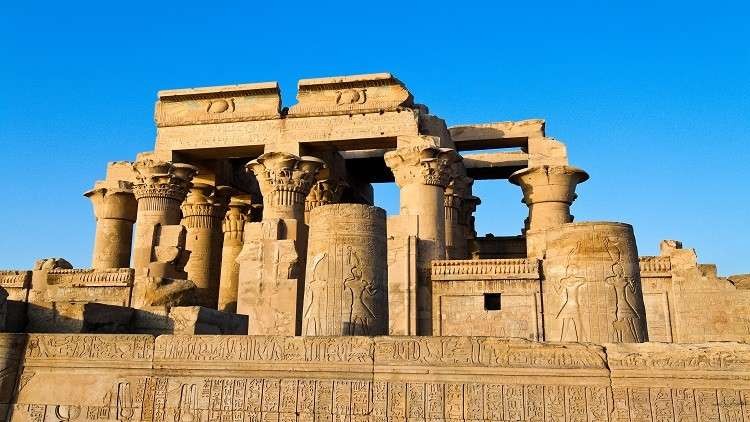
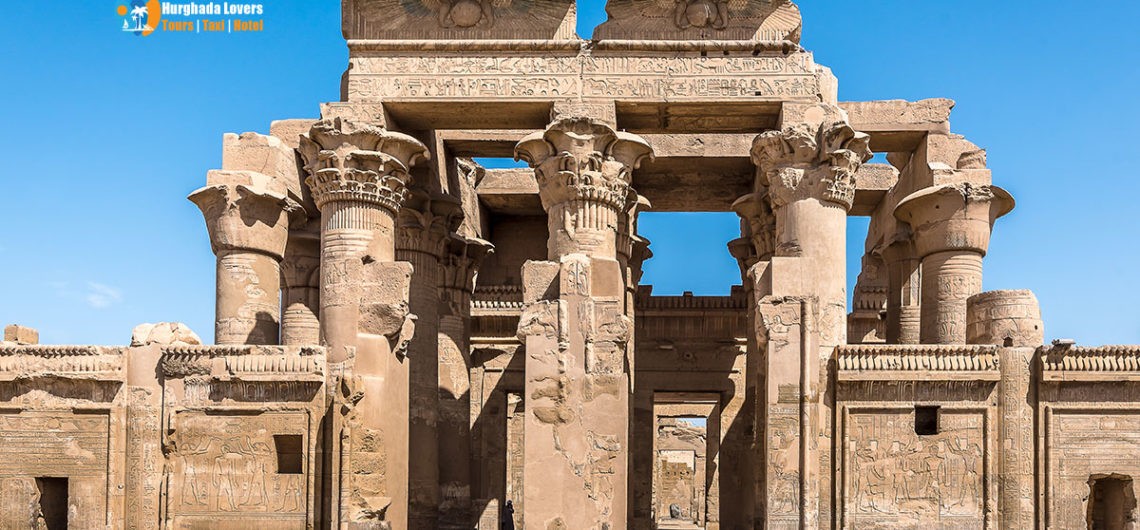
The temple has a unique design. Because it is dedicated to two deities, it has two parallel axial corridors that pass through its columned halls, and end with two shrines. The southern axis (on the right) is for Sobek, and the northern axis (on the left) is for Hur and R.
Sobek was the deity of fertility associated with water, floods, and plants, and he was worshiped here alongside his wife, the goddess of love and motherhood, Hathor, and their son, the goddess of the moon, Khonsu. As for the god of royalty, Horus is the son of Osiris and Isis, who reached adulthood and defeated Set (in the famous myth), the killer of his father. He was worshiped here alongside his wife, Ta-sentneferet, “the perfect companion,” and their son, Ba-nebtawi, “the Lord of the Two Lands.”
In addition to its beautiful column capitals, Kom Ombo Temple also features magnificent scenes adorning its walls. The calendar lists feasts and other religious activities, along with their dates and accompanying rituals. During the Roman era, in the 2nd century AD, a scene was engraved showing what were believed to be surgical instruments, demonstrating the extent of the development of ancient Egyptian medicine.
In the center of the back of the temple, Sobek and Hor and R can be seen on either side of the temple in a deeply symbolic scene, inspiring ancient pious visitors to this holy place.