
Abu Simbel Temple
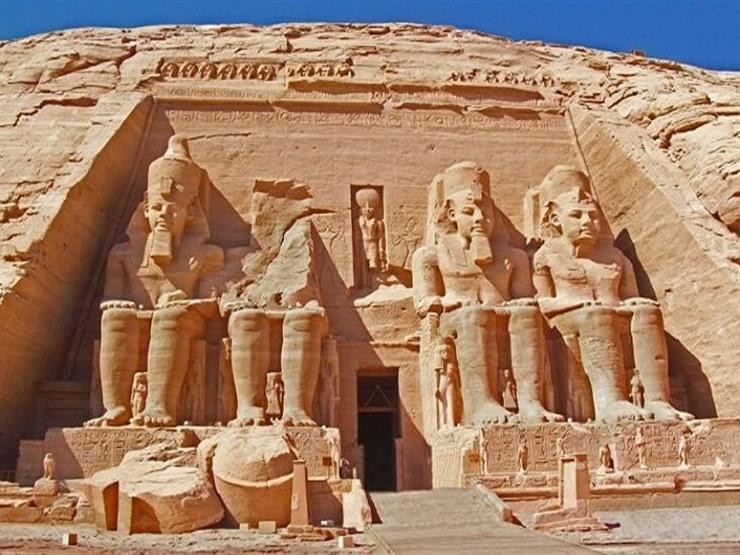
The Great Temple of Abu Simbel, located in Nubia near the southern border of Egypt, is among the most magnificent monuments in Egypt. It was built by King Ramesses II of the Nineteenth Dynasty and was completely cut into the mountain, around 1264 BC. The temple is famous for its four huge seated statues that adorn its facade, one of which collapsed due to an ancient earthquake and its remains remain on the ground.
Huge statues of the king stand on either side of the main hall leading to the Holy of Holies, where four gods sit: Amun-Ra, Ra-Horakhty, Ptah, and Ramesses II as a deity. The temple was built with great precision so that the sun’s rays enter the temple two days a year, on February 22 and October 22. And cross the main hall, and the statues located in the depths of the temple are illuminated, except for the god Ptah.
To the north lies another rock-cut temple known as the Little Temple, dedicated to the goddess Hathor and the great royal wife of Ramesses II, Queen Nefertari, and on the facade of the Little Temple stand her colossal statues of the same size as those of her husband, in a very rare example.
The two temples were moved from their original location in 1968 after the construction of the Aswan High Dam, which threatened to flood them. The transfer was completed thanks to international efforts led by UNESCO, and the temple was accepted into the list of World Heritage Sites in 1979.